
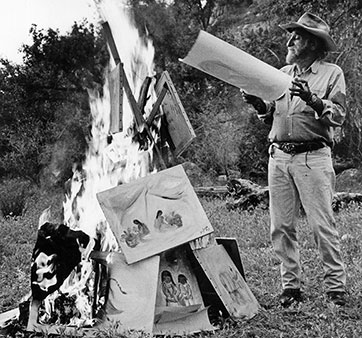
Art Burning 50th Anniversary
50th Anniversary of DeGrazia’s Burning Art in the Superstitions
Join us May 16, 2026, 5 to 7 p.m. to commemorate the 50th anniversary of DeGrazia’s legendary 1976 art burning, when the artist destroyed his own paintings to protest inheritance taxes. Gallery admission will be free for this evening celebration.
During the event, the Gallery gift shop will also offer collector’s edition bottles of Whiskey Del Bac’s classic single-malt whiskey featuring DeGrazia’s “Monster of Quitovac” painting. This limited-edition bottle is back by popular demand and available for purchase May 15 – 17 while supplies last.
Event Details
May 16, 2026, 5 to 7 p.m.
Free admission
Refreshments provided
The Story behind the Celebration
In May 1976, DeGrazia traveled into the Superstition Mountains with friends, gear-laden horses, and a collection of his own unsold paintings. After learning that the value of his artwork could create tax problems for his heirs, the artist built a roaring fire and burned many of his works in protest.
Some called it a publicity stunt. Others saw it as a bold act of defiance or an unforgettable piece of self-made legend. Whatever the motivation, DeGrazia knew how to make a point.
View Our Current Exhibits
During the event, guests can enjoy refreshments and explore the museum’s current limited-time exhibitions, “DeGrazia Paints the Seri Indians” and “Ted DeGrazia’s Unseen Landscapes.” Together, the exhibits bring rare paintings, watercolors, and drawings from the museum’s collection out of storage and into public view, including works shown publicly for the first time and others unseen for decades.
Time is also running out to catch “The Way of the Cross,” which closes May 28, 2026. This annual spring exhibit features 15 original oil paintings depicting the suffering and crucifixion of Christ, including DeGrazia’s unique Fifteenth Station representing the resurrection of Christ.
Visitors are also invited to wander the historic 10-acre foothills property, with its hand-built adobe architecture, verdant desert gardens, and deep connection to the region’s history, culture, and scenery.


